
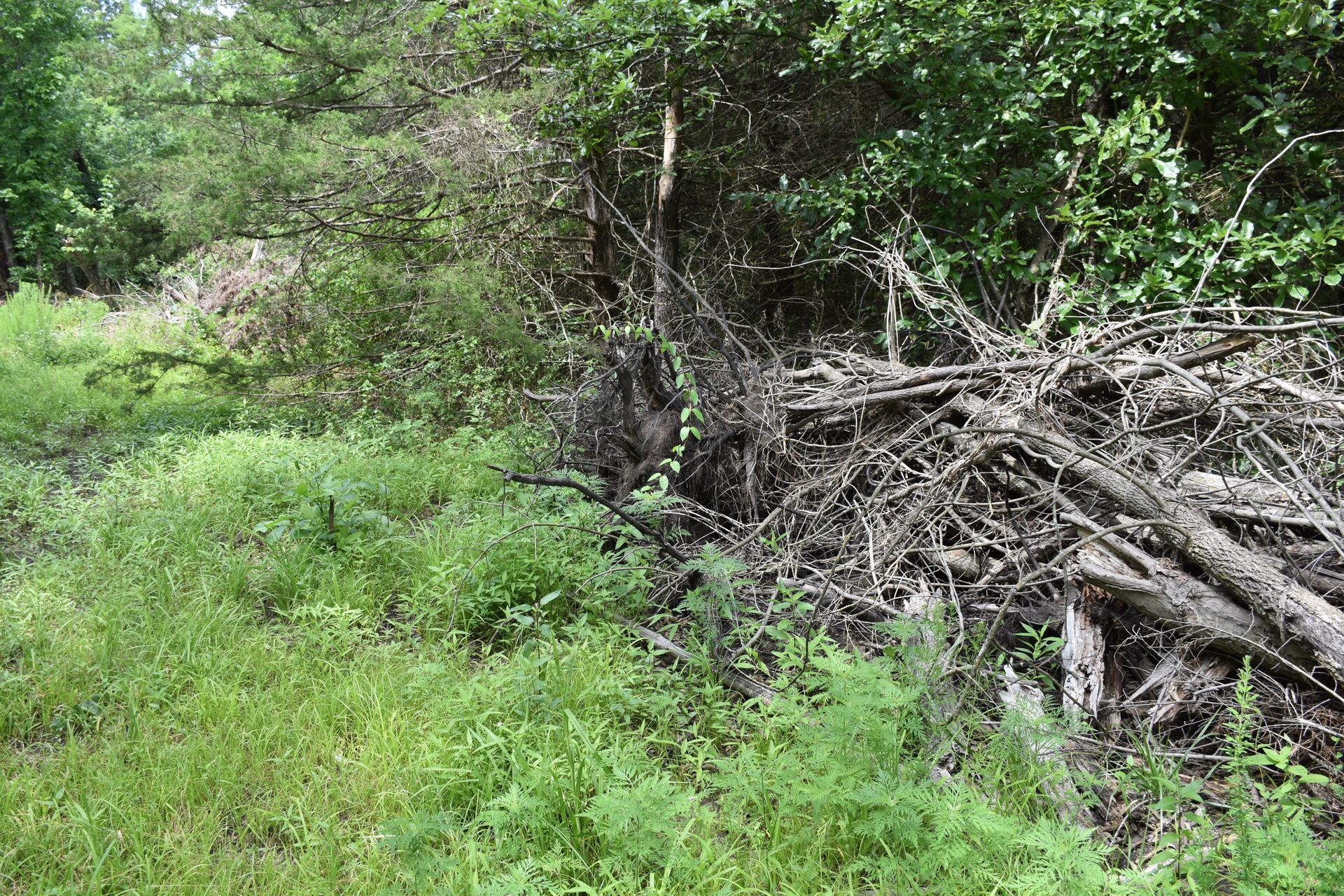
Clearing Dense Overgrowth for Functional Land
Brush Removal in Corsicana for properties limited by thick vegetation and inaccessible overgrown areas
Thick brush and overgrown vegetation prevent you from using sections of your property, block access for fencing or maintenance, and create fire hazards during dry Texas summers. Brush removal opens up these areas, transforming overgrown land into clean, accessible spaces ready for fencing, development, recreation, or agricultural use. Miller Terrain Solutions provides brush removal throughout Corsicana, clearing dense growth while leaving soil intact and ready for whatever comes next on your land plan.
The process involves more than cutting vegetation—equipment operators use forestry mulchers or brush cutters to grind material in place, creating mulch that decomposes and returns organic matter to the soil. This method eliminates the need for burning or hauling debris piles, speeds up clearing timelines, and reduces soil disturbance compared to traditional dozing. The mulch layer left behind helps control erosion on slopes and suppresses regrowth while you establish the next use for the cleared area.
Request a brush removal estimate to evaluate clearing scope, equipment requirements, and how the work prepares your property for upcoming projects.
What You Notice Once Brush Clearing Is Finished
Brush removal targets woody vegetation, saplings, vines, and dense undergrowth that limits property use and accessibility. Operators maneuver tracked equipment through overgrown areas, mulching material at ground level and leaving a relatively smooth surface covered with shredded organic matter. Fence lines become visible and accessible for installation or repair, building sites open up for future construction, and previously impassable sections allow vehicle or equipment access. The work preserves desirable trees when specified, selectively clearing around them while removing competing brush.
Once clearing is complete, you see open ground where thick vegetation previously blocked movement and visibility. Property boundaries become apparent, fence installation can proceed without obstruction, and equipment can access areas that were impassable before. The mulch layer settles over time, breaking down into soil while preventing immediate regrowth of the brush that was removed. Cleared land is ready for grading, pasture establishment, building pad preparation, or recreational development.
The scope depends on vegetation density and what you plan next—light clearing for pasture improvement differs from heavy removal preparing land for construction. Some properties include follow-up grading to smooth the mulched surface, while others leave the organic layer to decompose naturally. If the land will support livestock or crops, soil testing after clearing helps determine whether amendments are needed before planting. Fire risk reduction is another driver, particularly on rural properties where dense brush near structures creates wildfire hazards during drought conditions common to Central Texas.
Questions Before Starting Your Project
Brush removal projects involve equipment choices, timing considerations, and follow-up steps that affect clearing outcomes. Corsicana property owners typically ask these questions when planning vegetation clearing work.
What equipment is used for brush removal?
Forestry mulchers with rotating drums and cutting teeth grind brush into mulch in a single pass, while brush cutters work for lighter growth—equipment selection depends on vegetation density, terrain slope, and whether you want material mulched in place or cut and piled for removal.
How does mulching compare to traditional brush clearing?
Mulching eliminates debris piles that require burning or hauling, reduces soil disturbance, and creates an organic layer that controls erosion and suppresses regrowth—traditional dozing pushes brush into piles but leaves bare soil and requires additional cleanup steps.
What happens to the mulch left after clearing?
Shredded material decomposes over several months, returning nutrients to the soil while preventing erosion and slowing regrowth of cleared vegetation—it breaks down faster in wet conditions and can be worked into soil if grading follows.
When is the best time to clear brush in Corsicana?
Dry conditions allow better equipment access and reduce soil rutting, though clearing happens year-round based on project timelines—late winter before spring growth is ideal if you plan to establish pasture or crops after removal.
What can I do with cleared land after brush removal?
The area becomes accessible for fencing, grading, building pad preparation, pasture seeding, or recreational development—many property owners follow clearing with dirt work to further level the land or install drainage features before final use.
Miller Terrain Solutions clears overgrown properties efficiently using equipment matched to vegetation type and terrain conditions. Schedule brush removal to open up inaccessible land and prepare your property for fencing, development, or improved usability.