
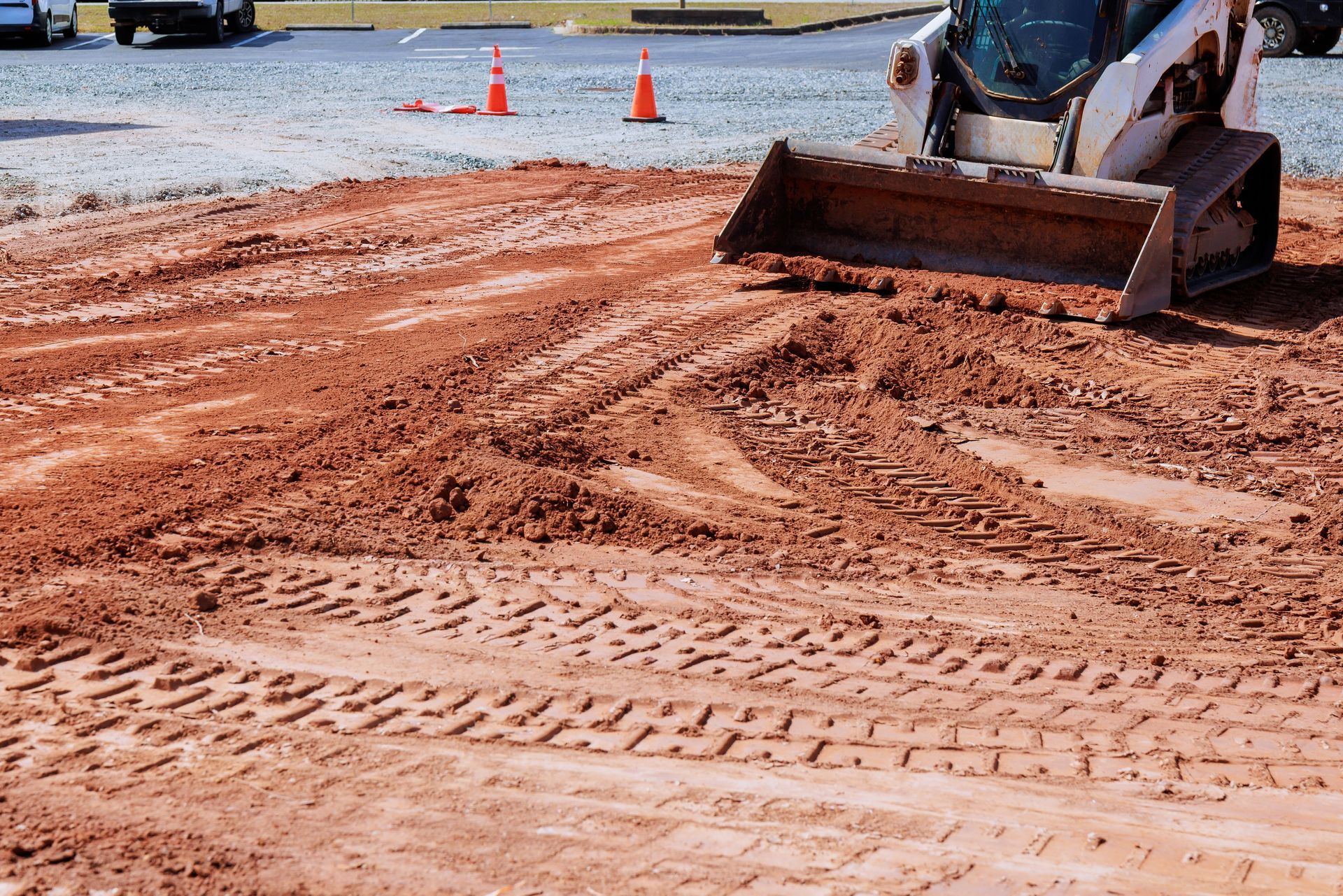
Surfaces Shaped for Proper Water Flow
Grading in Corsicana for properties needing stable building sites and controlled drainage
Central Texas clay soils hold water when the ground lacks proper slope, which causes foundation problems and erosion around structures. Grading reshapes the land surface to direct runoff away from buildings and create level areas where construction, driveways, or outdoor projects require stable ground. Miller Terrain Solutions operates grading equipment across Corsicana to establish the elevations and slopes that prevent standing water and soil movement.
The work involves cutting high spots and filling low areas until the finished surface matches the planned elevations. For building pads, this means creating a level platform with slopes that pitch away from where the foundation will go. For driveways and roads, grading establishes the crown or cross-slope that sheds water to the sides. Drainage swales and berms get shaped to intercept runoff before it reaches structures or paved areas.
Schedule grading services to review your site's drainage patterns and establish finished elevations before construction begins.
What Precision Grading Actually Accomplishes
Accurate grading depends on setting elevation stakes or using GPS-guided equipment to hit the design grades. Small changes in slope determine whether water flows where it's supposed to or pools against foundations and driveways. A two-percent slope might look flat to the eye but moves water effectively during storms, while completely level ground becomes a shallow pond after heavy rain.
Once grading finishes, you see water running off the property during storms instead of standing in puddles near buildings. The ground around foundations stays drier, which reduces the soil expansion and contraction that cracks slabs and shifts structures. Driveways and parking areas drain quickly, and equipment can access the site without creating ruts in soft, waterlogged soil. Projects built on properly graded pads encounter fewer surprises during construction because the stable, well-drained surface doesn't shift under loads.
Grading isn't limited to new construction—existing properties often need regrading when settling or erosion has changed the original drainage patterns. Yard areas that collect water can be reshaped to direct runoff toward appropriate drainage paths, and low spots near buildings can be filled and sloped to prevent future water intrusion.
What Customers Ask About Site Grading
Grading projects involve technical decisions about slopes, elevations, and drainage that affect long-term site performance and construction outcomes.
What slope does a building pad need for proper drainage?
Most building sites require at least a two-percent slope away from the foundation footprint for the first ten feet, which prevents water from pooling against the structure during heavy rain.
How does grading prevent erosion around properties?
Shaping drainage swales and establishing controlled runoff paths channels water at manageable velocities instead of letting it sheet across bare soil and carve gullies.
When should grading happen relative to other site work?
Finish grading comes after underground utilities are installed but before final surfaces like driveways or landscaping go in, so the elevations tie together correctly.
What makes grading challenging on clay soils around Corsicana?
Clay becomes sticky and unworkable when wet, then shrinks and cracks when dry, so timing grading work during moderate moisture conditions produces better compaction and finished surfaces.
Does grading eliminate the need for drainage improvements?
Grading controls where surface water flows, but properties with high water tables or heavy runoff from surrounding areas may still need subsurface drains or culverts to handle the volume.
Miller Terrain Solutions establishes site grades that account for soil conditions and surrounding topography so water moves off the property instead of collecting where it causes problems. Request a site consultation to discuss elevation requirements and drainage planning for your project.