
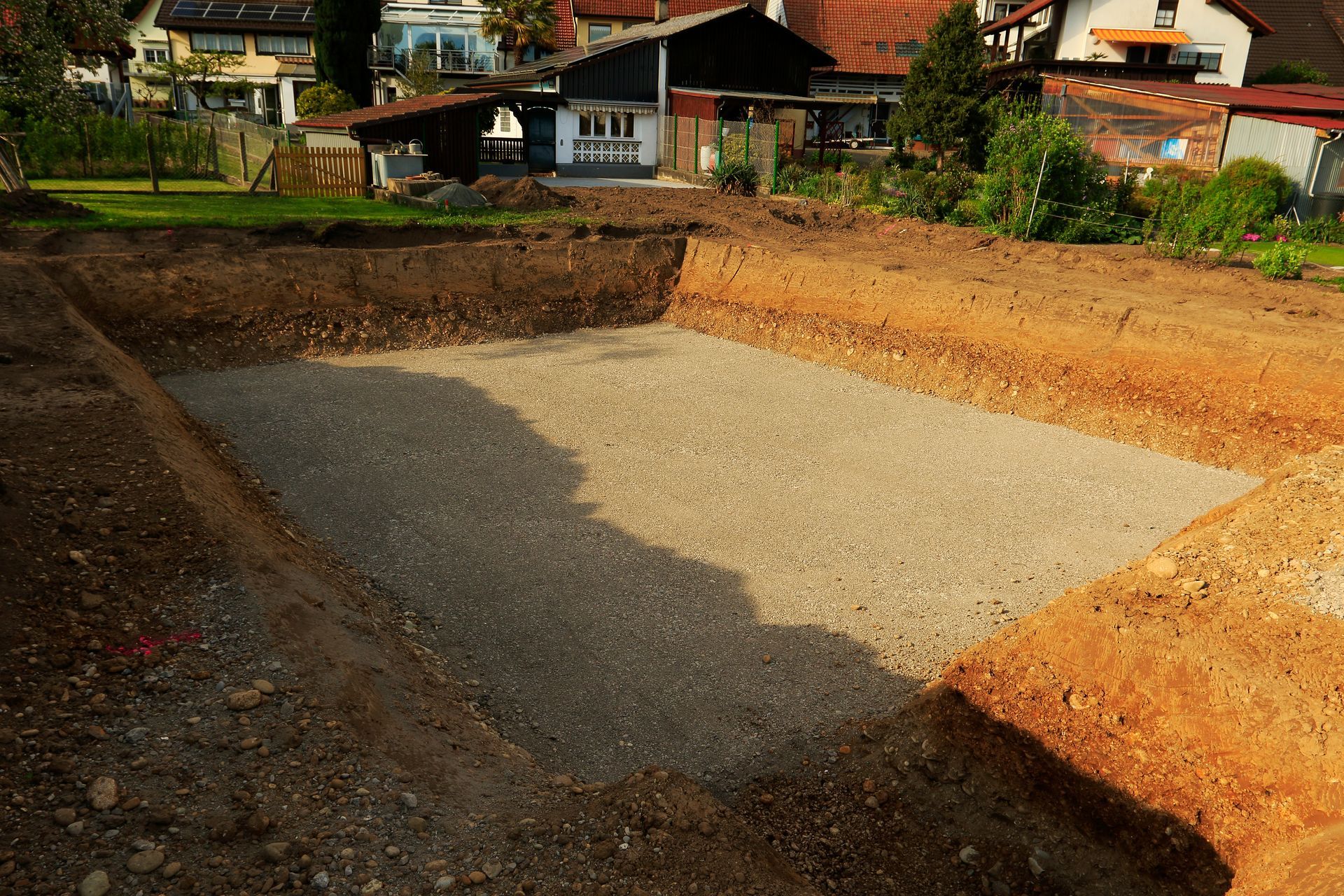
Building Pads That Support Structures Long-Term
House Pad Preparation in Corsicana for stable foundations before homes, shops, or barns are constructed
Miller Terrain Solutions prepares house pads in Corsicana, creating the stable, properly graded foundation base that homes, shops, and barns require before construction begins. A well-prepared pad establishes correct elevation, ensures water drains away from the structure, and provides compacted soil that won't settle under the weight of walls, roofing, and interior loads. Property owners and builders rely on this preparation to prevent foundation movement, cracking, and drainage problems that develop when pads are rushed or improperly compacted.
House pad preparation involves excavating to planned depth, importing and spreading fill material if needed, compacting soil in controlled lifts, and establishing final grade that slopes away from the building footprint. The work accounts for soil bearing capacity, frost depth, and how much the structure will weigh once complete. Central Texas clay soils expand with moisture and shrink during dry periods, making proper compaction and moisture control during preparation critical to preventing foundation movement after the building is up.
Arrange a pad preparation consultation to review site conditions, elevation requirements, and compaction standards before construction scheduling.
What Changes After Building Pad Preparation
Pad preparation begins with site clearing and excavation to remove topsoil and unsuitable material that would compress under structural loads. Operators establish perimeter elevations using grade stakes or GPS, then place and compact fill material in eight- to twelve-inch lifts, rolling each layer with vibratory equipment to achieve specified density. Final grading creates positive drainage—typically a minimum two percent slope—that directs water away from the building footprint toward designated drainage paths. Testing may verify compaction meets engineering specifications, particularly for larger structures or challenging soil conditions.
After preparation is complete, the pad surface sits level and firm at the planned elevation, with no soft spots or low areas where water could collect. Rain drains away from the building area instead of pooling beneath where the foundation will sit. The compacted soil supports construction equipment without rutting or settling, and the pad maintains its grade and density through weather exposure before building begins.
Pad preparation includes considerations beyond basic grading—some sites require undercut and replacement of expansive clay, others need fabric reinforcement beneath fill material, and properties with high water tables may require additional drainage features installed before compaction. Elevation planning must account for finished floor height, driveway transitions, and utility connections that tie into the structure. Builders provide foundation plans that specify pad dimensions, elevation, and any special compaction requirements based on structural engineering.
Common Questions About This Service
House pad preparation involves engineering considerations and site-specific decisions that affect long-term building performance. These answers address what builders and property owners in Corsicana typically ask before pad work begins.
What makes a building pad stable enough for construction?
Proper compaction achieves soil density that resists settling under structural weight, while positive drainage prevents water accumulation that weakens soil beneath the foundation—both factors require controlled material placement and verification during preparation.
How is pad elevation determined?
Foundation plans specify finished floor height, which dictates pad elevation after accounting for foundation thickness, stem wall height, and final grading around the structure—the pad must also tie into driveway access and drainage patterns across the property.
What happens if native soil won't support a structure?
Unsuitable material gets excavated and replaced with engineered fill—select fill or crushed stone compacted in layers to meet bearing capacity requirements—depth of replacement depends on how far down stable soil is encountered.
How do Corsicana soil conditions affect house pad preparation?
Expansive clays require moisture control during compaction and sometimes chemical stabilization or deeper excavation to reach more stable material—pads built on improperly prepared clay often develop cracks as the soil swells and contracts with seasonal moisture changes.
What indicates the pad is ready for foundation work?
The surface remains firm under equipment traffic, maintains planned elevations without settling, sheds water during rain events, and meets any specified compaction testing requirements that engineers or building inspectors require before foundations are poured.
Miller Terrain Solutions prepares building pads according to foundation engineering requirements and site-specific conditions. Schedule house pad preparation to establish stable, properly drained foundation support before your construction timeline begins.